Home
FAQs
Contact
Products
📦 All Products
Lift Retrofit
Modernization
Engineered vertical transportation systems for high-traffic residential towers in Bangalore.
Designed for continuous usage, peak-hour traffic handling, optimal lift speed selection, and long-term reliability — not standard passenger lifts.
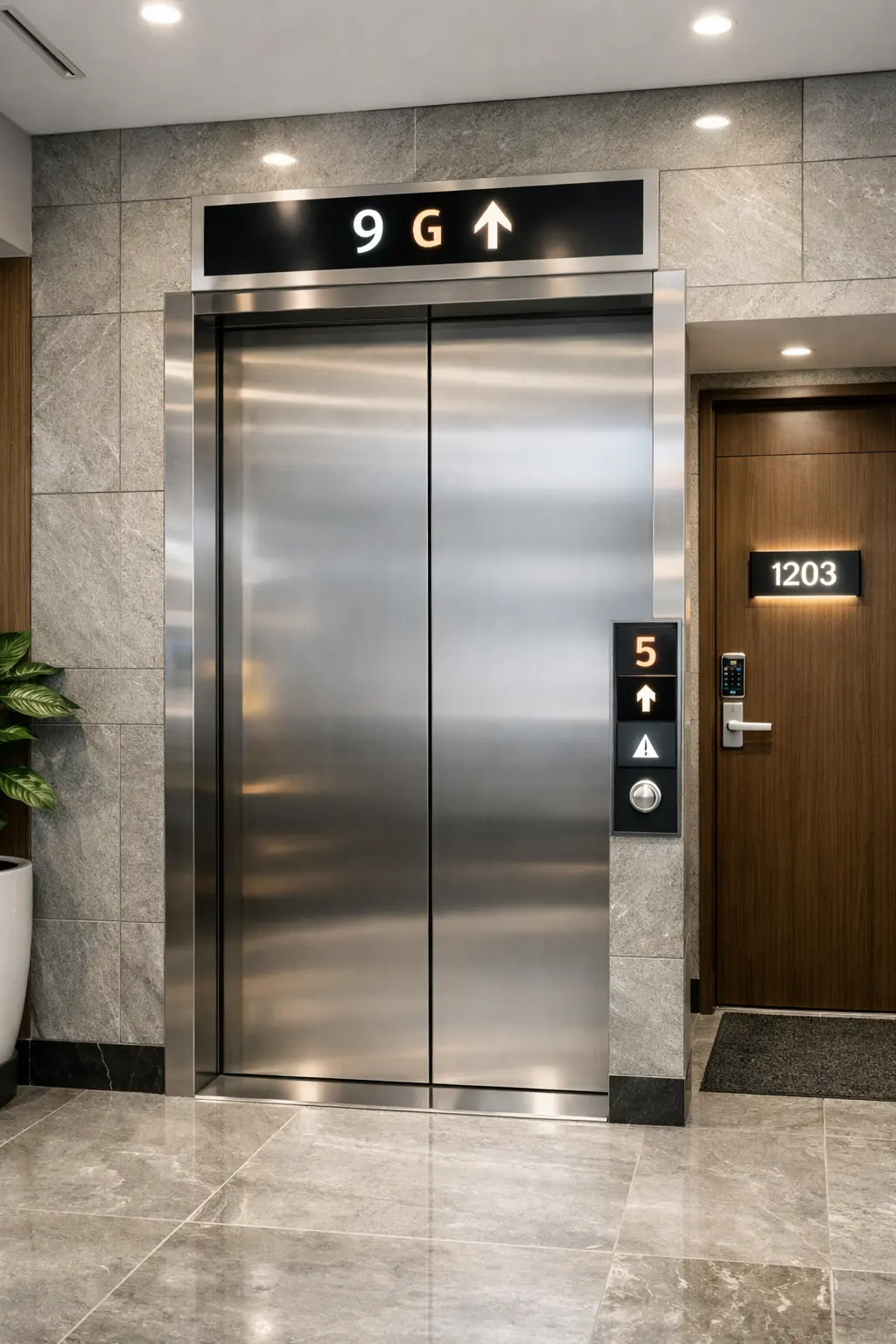
As buildings grow taller and denser, vertical movement becomes a critical system — not a basic utility.
Higher floors increase travel distance, affecting wait time and ride efficiency during peak usage.
Increased occupancy leads to elevator crowding, especially during morning and evening peak hours.
Elevator shafts compete with staircases, parking, and utilities — requiring optimized system planning.
We don’t supply lifts — we design vertical transport systems tailored to your building’s traffic, height, and space constraints.
Designed to reduce travel time and improve ride efficiency in G+9 and above structures.
Elevator grouping and control logic designed to handle peak usage without congestion.
Maximizes usable building space while meeting lift capacity and compliance requirements.
Different buildings require different system configurations — based on traffic demand, building height, and usage patterns.
Efficient for residential towers with moderate traffic and optimized floor distribution.
Reduces number of trips required during peak hours — improving overall system efficiency.
Smart control logic distributes traffic efficiently across elevators to minimize wait time.
Performance is measured by how efficiently people move — not just lift specifications.
Percentage of total building population moved within 5 minutes during peak demand.
Optimized systems reduce passenger wait time during peak hours significantly.
Efficient system design increases the number of trips per elevator — improving overall traffic flow without adding more lifts.
Efficient elevator systems are driven by control logic — not just hardware. Traffic management ensures smooth movement during peak demand.
Multiple elevators operate as a coordinated system to distribute passenger load efficiently.
Calls are assigned dynamically to reduce waiting time and avoid unnecessary stops.
System behavior adapts to traffic patterns during morning and evening peak usage periods.
Typically 2–3 elevators depending on number of flats, traffic patterns, and peak-hour demand.
Ideally under 30–40 seconds during peak hours with proper traffic planning and system configuration.
It is the percentage of total building population that can be transported within a fixed time (usually 5 minutes).
Yes. Buildings above G+9 require commercial-grade elevator systems due to higher usage and traffic load.
Elevator system planning directly impacts how efficiently your building space is used.
Through efficient elevator planning, shaft reduction, and optimized core layout.
Commercial elevator systems for high-rise buildings are designed for continuous operation, safety compliance, and reliable performance under high traffic conditions.
Elevator systems are designed to operate continuously — even during power fluctuations or outages — ensuring uninterrupted vertical movement in high-rise buildings.
Designed to maintain elevator availability and safe operation even during power interruptions.
Elevator installation begins at the design stage — not at the site. We work as a system design partner to ensure optimal performance, space efficiency, and long-term reliability.
Early-stage consultation with architects and builders to align elevator systems with building layout and project goals.
Passenger flow, peak-hour demand, and usage patterns are analyzed to determine optimal number of lifts and system configuration.
Shaft dimensions and core layout are optimized to improve space utilization while maintaining system performance.
Elevator systems in high-rise buildings are long-term assets. The right system design reduces operational cost, energy usage, and maintenance over the building lifecycle.
Efficient system planning reduces energy consumption, maintenance frequency, and long-term operational costs across the building lifecycle.
Elevator systems are planned based on real project conditions — building density, traffic patterns, and usage scenarios across Bangalore’s growing high-rise zones.
Large gated communities and high-rise towers requiring multi-elevator systems with traffic optimization and peak-hour efficiency.
Residential towers with high daily movement driven by tech workforce — requiring efficient traffic handling and continuous operation systems.
Growing high-rise residential zones with varying building heights — requiring scalable elevator system planning.
Work with an engineering partner to plan the right elevator system based on your building design, traffic requirements, and long-term performance goals.